Project Overview
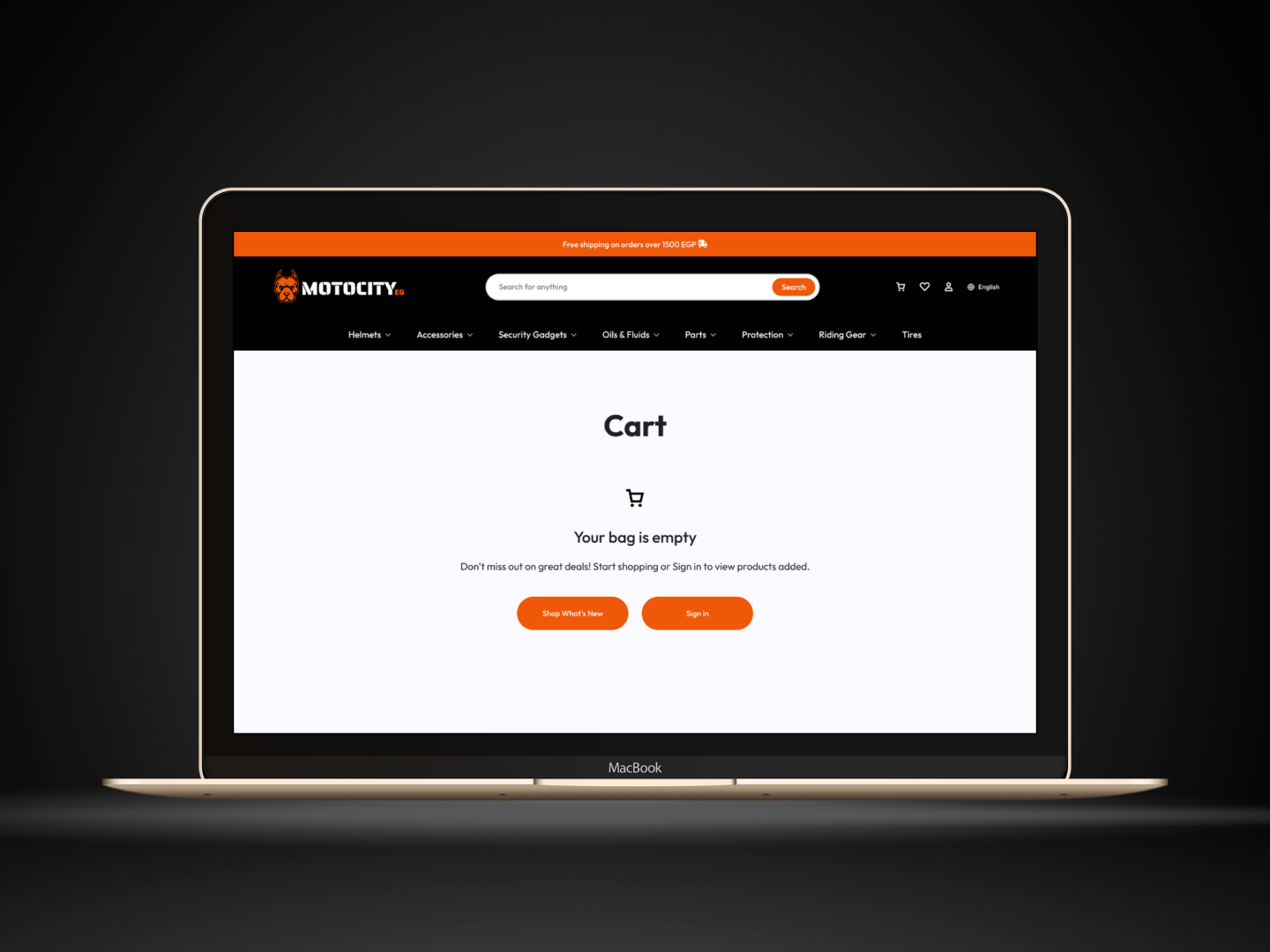
Motocity is an e-commerce platform built to simplify how motorcycle riders in Egypt shop for accessories and spare parts. The goal was to create a user-friendly and performance-focused experience that helps users quickly find, compare, and purchase products across multiple categories.
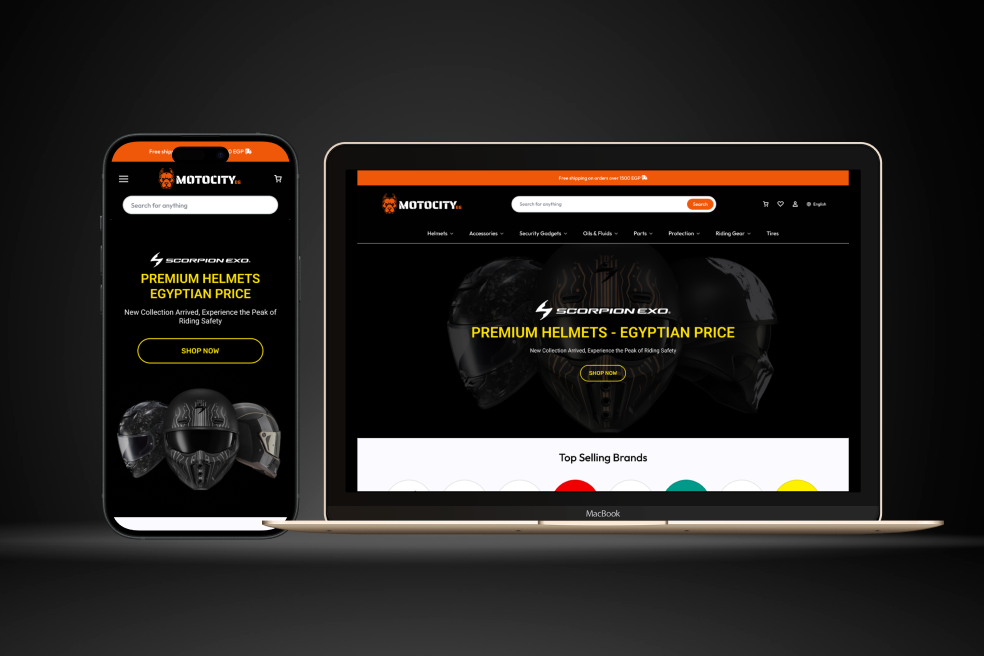
The project involved designing both the mobile and web versions of the platform — ensuring a consistent and accessible experience for riders on the go.
Objective
The main challenge was to create a clean, intuitive interface that makes it easy for users to browse products without getting overwhelmed, while also maintaining a bold and dynamic brand identity that reflects the energy of the motorcycle community.
Research & Insights
Before starting the design, I conducted a market review of regional and international competitors in the motorcycle e-commerce space. The research revealed that most existing platforms lacked intuitive navigation and clear product categorization.
We focused on:
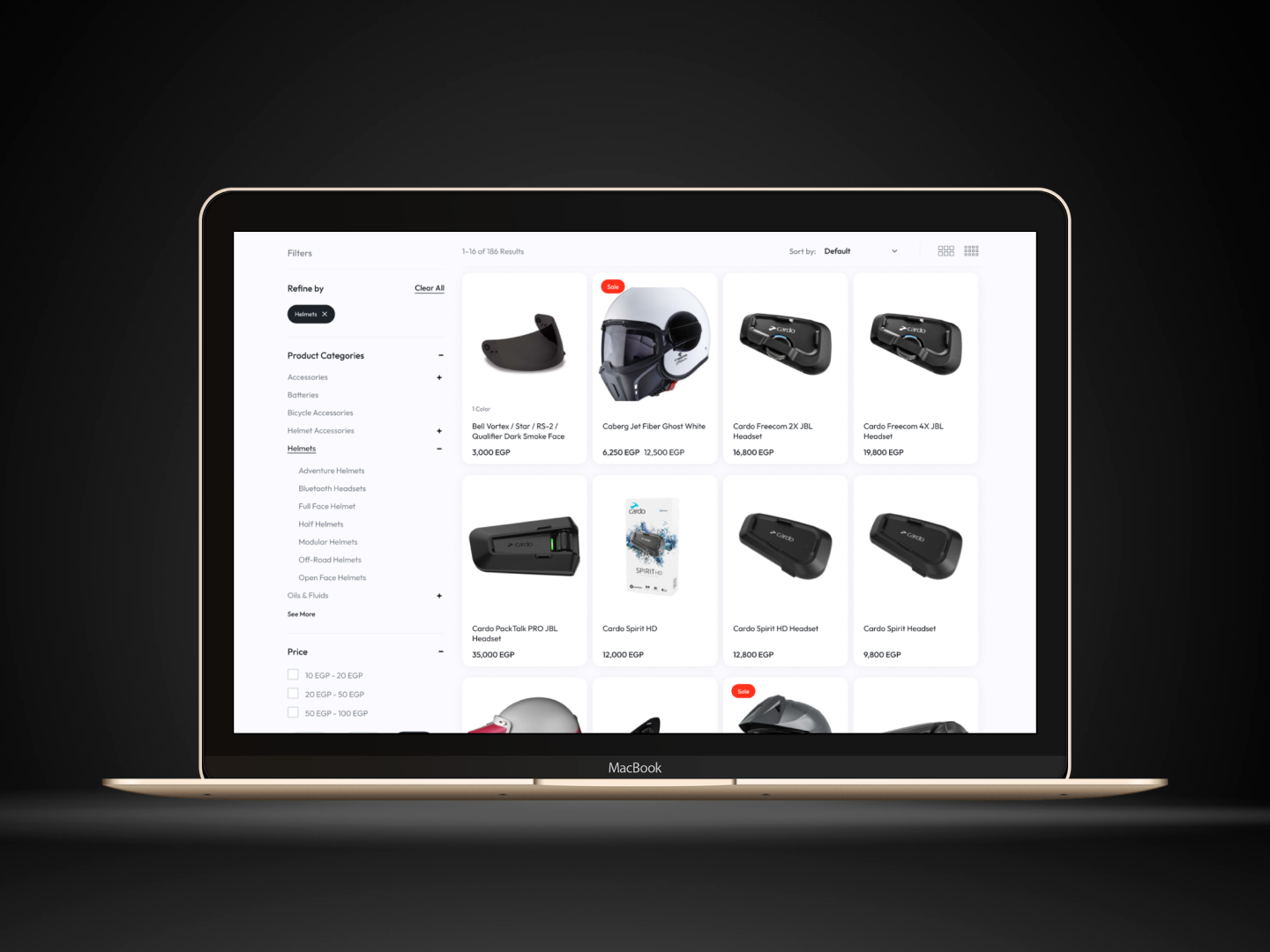
Simplifying product discovery through well-structured navigation and smart filters.
Highlighting trust and reliability through clear visuals and easy checkout flow.
Ensuring mobile-first usability, since many users access the site on the go.
Design Process
Using Figma, I designed the full user flow from browsing to checkout, focusing on clarity and hierarchy.
Key design highlights:
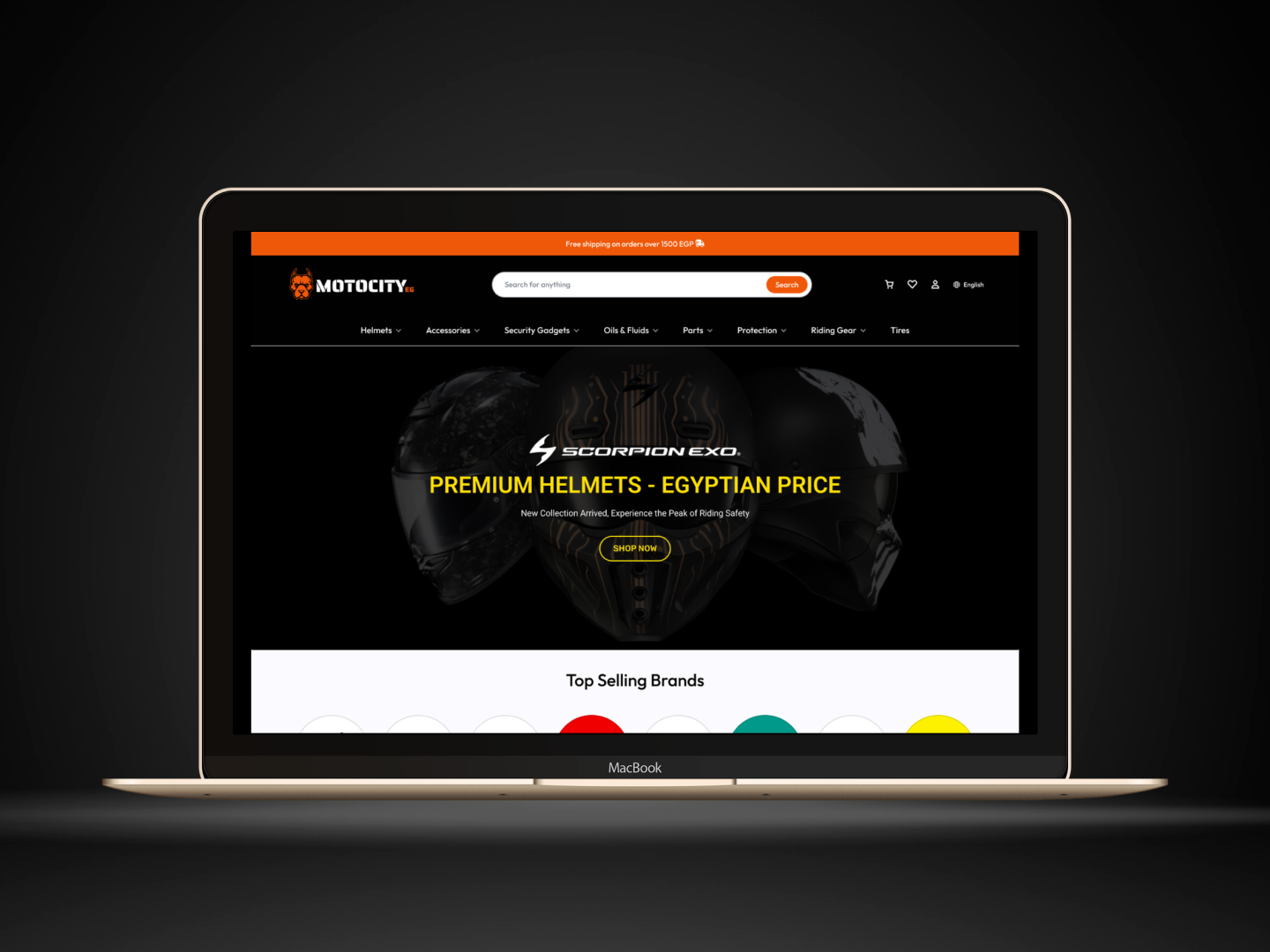
Homepage: Showcases top categories, new arrivals, and featured products.
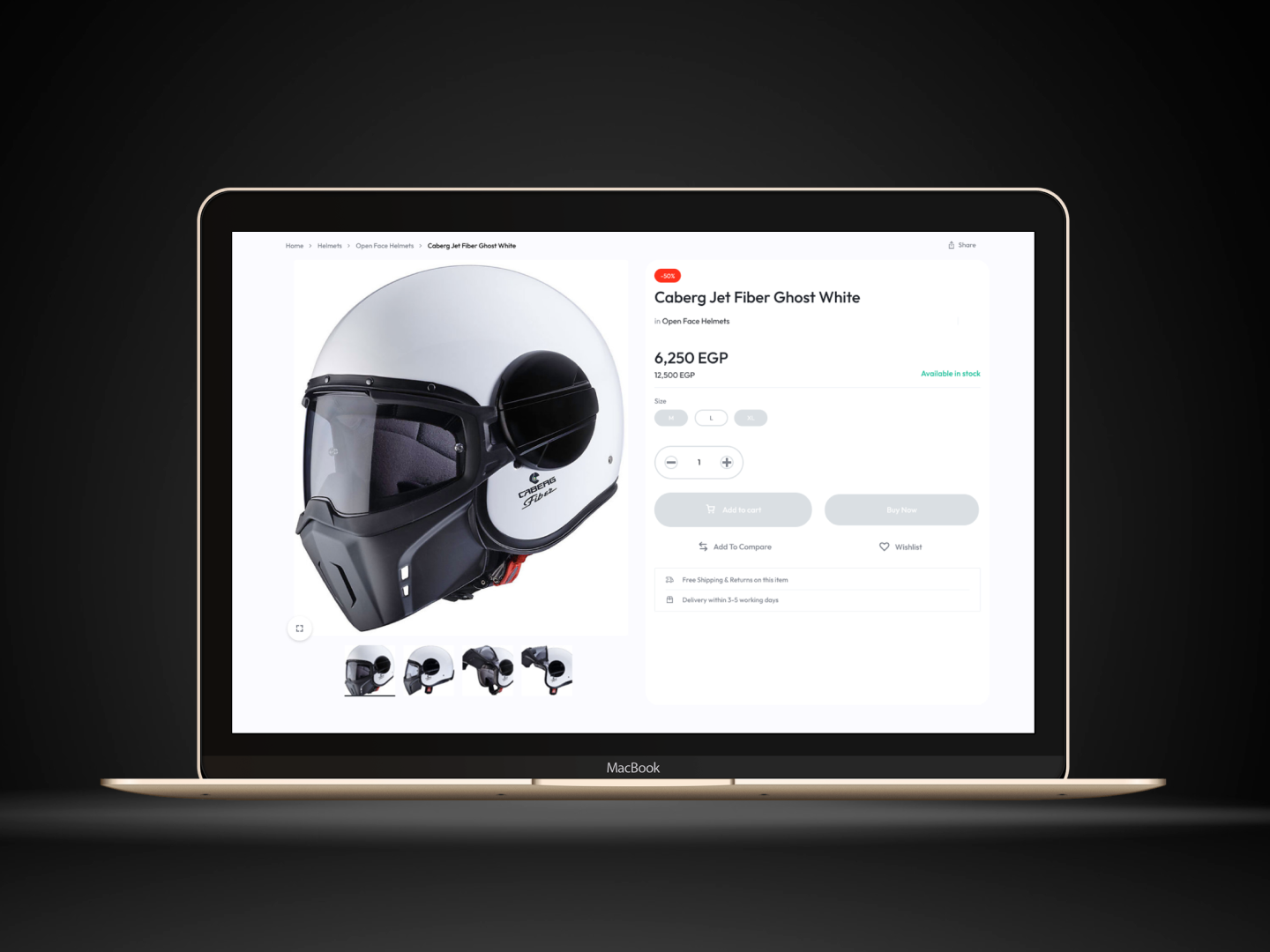
Product Page: Designed with large visuals, easy-to-read specs, and a clear “Add to Cart” call to action.
Checkout Flow: Simplified into fewer steps to reduce cart abandonment.
Mobile Layout: Optimized thumb-friendly navigation for quick interactions.
After development, I collaborated with the client on QA testing to ensure every detail matched the design and provided feedback for micro-interactions and responsiveness.
Outcome
The result was a smooth and visually engaging e-commerce experience tailored to Egypt’s motorcycle community. The redesign improved usability, helped users find parts faster, and built a stronger sense of trust through a clean, modern design.